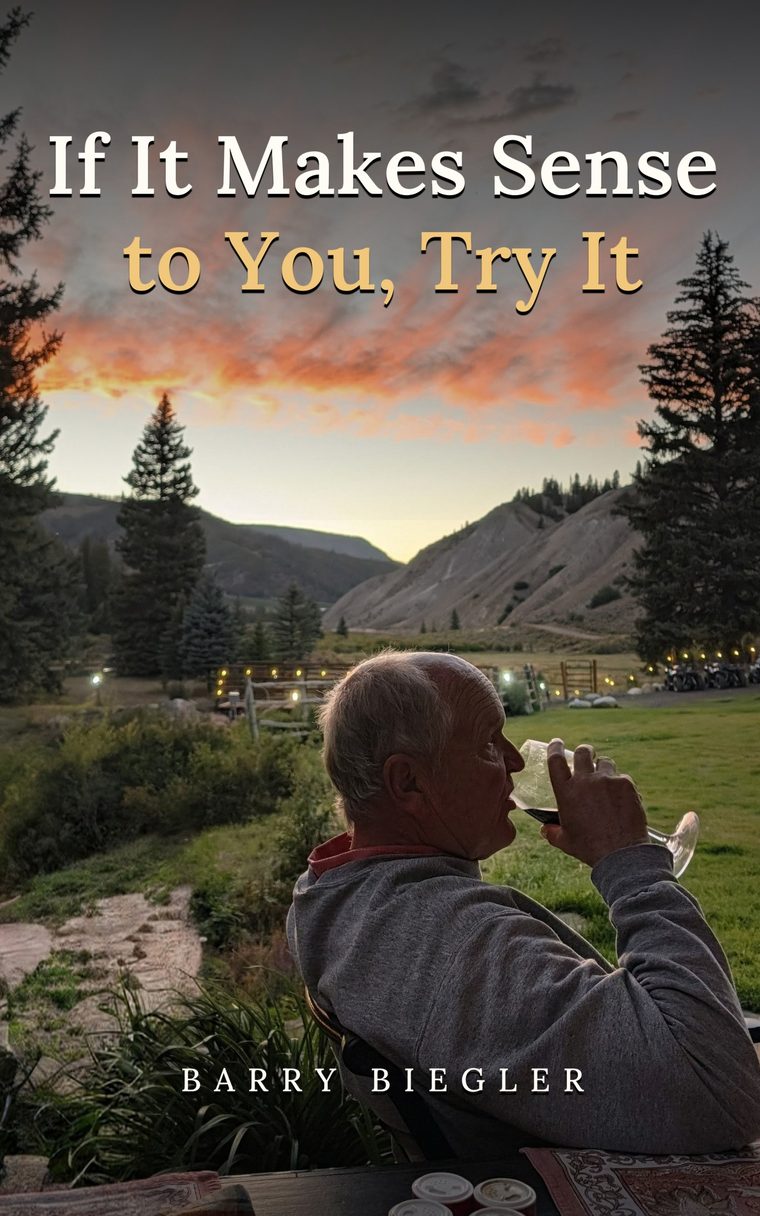
From the book If It Makes Sense to You, Try It, by Barry Biegler
Finishing What You Start Phrases
What Am I Doing? What Do I Want to Be Doing?
It’s Not What You Know, It’s What You Remember to Do
Goals Don’t Have to Be Difficult to Be Valuable
Do I Really Need All These Ways to Interrupt Me?
Watch Out for a Bowl of Cheetos
Sometimes You Can’t Do Things One at a Time
Make a List of What You Got Done, Not Only To-Do Lists
Watch Out for a Bowl of Cheetos
If there is a bowl of Cheetos on the table during a meeting, I’m going to eat a few, and perhaps more than a few, even though I may be on a diet and Cheetos are certainly not on it. There are just some things that are irresistible, and the best thing for me to do is take away the bowl. No Cheetos on the table or in the house.
I asked a friend who had been an employee for years if he remembered any phrases I used that might be good for this book. He remembers that when he was lost in a quagmire of answering endless emails, I would tell him, “Email for you is like a bowl of Cheetos. You are going to eat one email after another and another. Picking up the phone and freaking calling prospects is your job, not eating Cheetos.”
He says I used a different word than “freaking,” and I probably did. The point was that putting a computer with email in front of him was just like putting a bowl of Cheetos in front of me. I know they aren’t good for me, but I eat them anyway. He knew email would suck him in and keep him from more important tasks, but he still opened it. It’s been 20 years since I had this conversation with him, and he said that when he finds himself lost in email he thinks, “Stop it, you’re eating Cheetos again.”
Instagram has become my latest bag of Cheetos. I open it in the morning thinking, “I’ll just look at a few things my friends are doing,” and the next thing I know 45 minutes have passed and I haven’t seen anything from a friend in the last 43. I’m aware of the “Cheeto factor,” so I don’t open Instagram at all, and start writing this book instead.
What Am I Doing? What Do I Want to Be Doing?
I can lose an hour in a problem that doesn’t matter. Last time it was Medicare: ten minutes to confirm a charge wasn’t a duplicate, then an hour wandering through Part A, Part B, and IRMAA before I asked myself the two questions. What was I doing? Untangling Medicare. What did I want to be doing? Anything else, and this book most of all. Dripping faucets, email, people walking through the open door: they all pull me off my list the same way, and one question gets me back, once I remember to ask it.
This is a short overview. The complete phrase, with the story behind it, is in the book. 14 complete sample phrases are available on the links below.
It’s Not What You Know, It’s What You Remember to Do
Knowing how to fix a problem is useless until I do something, and once I know what to do, more knowledge doesn’t help. That is why the phrase says remember: it assumes I already know the action, and that the whole game is noticing in time and then doing it. My biggest remaining problem is finding myself in the middle of something I never meant to be doing. I keep several phrases on hand for that moment on purpose, and when one of them finally fires, I try to say “back on track” instead of “are you ever going to learn?”
This is a short overview. The complete phrase, with the story behind it, is in the book. 14 complete sample phrases are available on the links below.
No One Is Coming
Nathaniel Branden opened a weekend seminar by telling a room full of people with bad marriages and jobs they hated that nobody was coming to rescue them, including him. I had carried my own problems for years with a vague feeling they would somehow work out, which is the same as waiting for a rescue. They don’t work out by magic. He also believed each of us already knew most of our answers and could get to work. When a problem has been sitting there and I am doing nothing, I tell myself no one is coming and get moving.
This is a short overview. The complete phrase, with the story behind it, is in the book. 14 complete sample phrases are available on the links below.
Better Late Than Never
I first wrote “I should write the book” in my diary in 1980 and kept writing it for forty-six years. A team of psychiatrists could explain the delay; I don’t need the explanation. This old phrase is my free pass: it doesn’t matter how long it took, what matters is that it got done. It also makes me ask what else I have wanted to do for decades and never started. If I stalled this long on the book, I was stalling on other things too, and they are on the bucket list now.
This is a short overview. The complete phrase, with the story behind it, is in the book. 14 complete sample phrases are available on the links below.
Goals Don’t Have to Be Difficult to Be Valuable
I used to think a goal was only worth having if it was hard, so an A in every class became an A+ in every class, including the History of the Aztecs, which I did not care about. I failed most of those goals and the ones I hit meant nothing to me. A therapist suggested picking goals for their value to me, easy or not. The habit was so strong I had to start with one: more time with my family, beginning with dinner with my wife twice that week. Hitting it made the next real goal easier to see.
This is a short overview. The complete phrase, with the story behind it, is in the book. 14 complete sample phrases are available on the links below.
Aim Small, Miss Small
In The Patriot, the father tells his boys to aim at a button on the soldier’s coat: miss the button by six inches and you still hit the man; aim at the whole man and you might miss entirely. I use it to swap a vague target for a precise one. Getting in shape turns into two miles on foot today. The book I will write someday turns into one chapter today. Shooting the puck turns into a three-inch spot in the corner of the net. On the golf course, “keep your eye on the ball” became one blade of grass.
This is a short overview. The complete phrase, with the story behind it, is in the book. 14 complete sample phrases are available on the links below.
Do I Really Need All These Ways to Interrupt Me?
My father ran a 200-person company in 1960 and nobody reached him without going through Murph, his secretary. His phone never rang, his mail was opened for him, his meetings ended on time. I had an open door, a phone anyone could dial, email that beeped, a cell phone that never slept, and I wondered why I got less done each year. Technology wasn’t doing it to me; I was letting it. Now I list the priorities, shut the door, turn everything off until they are done, and then turn it back on, when nothing is left to interrupt.
This is a short overview. The complete phrase, with the story behind it, is in the book. 14 complete sample phrases are available on the links below.
Watch Out for a Bowl of Cheetos
Set Cheetos on the table in a meeting and I will eat them, diet or no diet, so the only fix is no bowl. I told a salesman who was drowning in email that it was his bowl of Cheetos; calling prospects was his job. Twenty years later he still catches himself with “stop it, you’re eating Cheetos again.” Instagram is my current bag: a quick look at what friends are doing turns into 45 minutes of strangers. I know the Cheeto factor, so I don’t open it, and I write instead.
This is a short overview. Read the entire phrase. 14 complete sample phrases are available on the links below.
Make a Pile and Hide It
My office used to be stacked a foot deep with folders, each one a problem, a project, or something to read someday, and every stack demanded attention I never gave it. Sorting them one at a time would have taken a year. So I made one big pile and put it in the closet. Months later I had never pulled a single thing out, and I threw it all away. New stuff goes straight to the closet now. The ranch got the same treatment: twenty piles in plain sight became one pile way over yonder. Same junk, clear head.
This is a short overview. The complete phrase, with the story behind it, is in the book. 14 complete sample phrases are available on the links below.
Sometimes You Can’t Do Things One at a Time
Sorting my closet one item at a time, keep or give away, got me a few shirts in and then I quit, for weeks. So I picked the 15 outfits I liked best and gave away everything else in half an hour. I don’t miss any of it. Hundreds of books became my 20 favorites. At the company, a meeting to list every possible project grew to 30 items and would have gone on for days, so I changed it to the first five we thought of, then pick one. The first five are probably better than the ninetieth anyway.
This is a short overview. The complete phrase, with the story behind it, is in the book. 14 complete sample phrases are available on the links below.
Make a List of What You Got Done, Not Only To-Do Lists
I used to delete each finished item from my to-do list and, if the list ever emptied, start filling it for tomorrow. Then I ran across the idea of listing what I got done instead. At the end of the day I write down what I finished, and when something big is on it, like finally booking the vacation, I stop and enjoy it. It lifts my mood and makes me want to do it again tomorrow. The last item on my to-do list is now to review and celebrate the day. A phrase made sense, I tried it, it worked.
This is a short overview. The complete phrase, with the story behind it, is in the book. 14 complete sample phrases are available on the links below.
A Good Excuse Doesn’t Solve the Problem
The client won’t call back after two messages, three emails, and a text. “I did my best” is a fine excuse and the deal is still not closed; if it matters, I get on a plane or call the owner. My office roof leaked on expensive equipment, and the office manager told me he had called the roofer twice, as if that were the job. The job was a dry roof. The moment I start debating whether an excuse is good enough, I have stopped working on the problem. Quitting on purpose is different, and it is a decision, not an excuse.
This is a short overview. The complete phrase, with the story behind it, is in the book. 14 complete sample phrases are available on the links below.
Be the Man in the Arena
Teddy Roosevelt gave the credit to the man in the arena, the one who acts, fails, and gets criticized, not to the bystander who points out his mistakes. Being in the arena costs something, and the critics now have the internet. One year we had seven travel-level hockey players and Taos had six, so we made one team. Our local board refused to allow it and had no other plan for those seven kids. I registered the team in New Mexico, we won seven of eight tournaments without a single practice, and the kids made friends for life.
This is a short overview. The complete phrase, with the story behind it, is in the book. 14 complete sample phrases are available on the links below.
Do I Really Not Care?
After a full day failing to find why the water pressure at the ranch had dropped to nothing, I told my wife I didn’t care anymore. Not true. I cared plenty; I was exhausted. The honest version was “I’m tired and frustrated, I’ll pick it up tomorrow.” Some “I don’t care”s are accurate, like a book on the history of opera. The dangerous ones are about things I care about a lot, and they come out of frustration, not a decision. When I hear myself say it, I ask which one this is.
This is a short overview. The complete phrase, with the story behind it, is in the book. 14 complete sample phrases are available on the links below.
Is It Time to Stop?
Starting a big project takes me forever, but once I am rolling I don’t stop, long past the point where I am tired and the work is getting worse. One day on this book I wrote six good phrases in six hours, then kept going, hungry and irritable, and each new one was worse than the last. The same thing happens when I get my teeth into a problem that isn’t even important. The question is simple, and the answer is usually obvious. I just wish I asked it sooner.
This is a short overview. The complete phrase, with the story behind it, is in the book. 14 complete sample phrases are available on the links below.
A book of 127 helpful short phrases divided into 11 categories.
Complete Phrases Samples
Fourteen phrases from the book, complete. Click one to read it.